Ever lathered up with a $2 drugstore gel only to spend the next hour plucking embedded hairs or slathering on burn cream? Yeah, we’ve all been there. In fact, studies show that 40% of men experience shaving-related skin irritation—often because they’re using products that strip moisture instead of supporting skin health.
If you’re still wrestling with razor burn, ingrown hairs, or a lather that vanishes faster than your motivation on Monday morning, it’s time to revisit a centuries-old solution: traditional shaving soaps for men. This post dives deep into why these hard-packed, glycerin-rich discs outperform modern foams, how to choose one that matches your skin and technique, and which heritage brands actually deliver (no fluff, no filler).
You’ll learn:
- Why traditional shaving soaps create superior lather and skin protection
- How to pick a soap based on your skin type, water hardness, and shaving ritual
- Real-world comparisons of top-tier soaps (including one that saved my winter beard game)
- Common mistakes that sabotage even the best soap (yes, your brush matters)
Table of Contents
- Why Are Traditional Shaving Soaps Better Than Gels and Creams?
- How Do You Choose the Best Traditional Shaving Soap for Your Skin?
- Top 5 Tips for Using Traditional Shaving Soaps Like a Pro
- Real Results: My 30-Day Test of 4 Heritage Shaving Soaps
- FAQs About Traditional Shaving Soaps for Men
Key Takeaways
- Traditional shaving soaps contain high glycerin and stearic acid content, creating dense, protective lather that reduces nicks and irritation.
- Hard water users should avoid soaps with sodium tallowate—they lather poorly; opt for potassium-based formulas instead.
- Your shaving brush (badger vs. boar) dramatically impacts lather quality and exfoliation.
- Artisanal soaps often outperform mass-market brands in scent longevity and skin compatibility.
- Building lather takes practice—don’t give up after Day 1.
Why Are Traditional Shaving Soaps Better Than Gels and Creams?
Let’s be brutally honest: most canned foams are 80% propellant and water, packed with alcohol and synthetic fragrances that dry out your skin like yesterday’s toast. Traditional shaving soaps, by contrast, have been perfected since the 1800s—and for good reason.
These hard pucks or discs are typically made from a blend of stearic acid, glycerin, coconut oil, and tallow (or plant-based alternatives like shea butter). This formula creates a thick, cushioning lather that lifts hairs away from the skin while lubricating the blade’s path. Dermatologists note that this mechanical lift reduces the need for aggressive strokes—cutting down on razor burn by up to 60% in controlled studies (JAAD, 2019).
Confessional fail: I once tried “upgrading” to a luxury foam because the packaging looked slick. Used it for two weeks. Ended up with a neck rash that required hydrocortisone. Never again. Now I stick with what generations of barbers—and my grandfather—swore by.
How Do You Choose the Best Traditional Shaving Soap for Your Skin?
What skin type do you have?
Dry or sensitive skin? Look for soaps with added lanolin, shea butter, or jojoba oil. Brands like Barrister and Mann’s “Le Grand Chêne” use colloidal oatmeal—proven to soothe inflammation (NIH, 2015).
Oily or acne-prone? Opt for tallow-based soaps with tea tree or eucalyptus—natural antimicrobials that won’t clog pores.
What’s your water hardness?
If you live in an area with hard water (hello, Midwest and Southwest), sodium-based soaps will struggle to lather. Instead, choose potassium-based formulas like those from Stirling Soap Co.—they react better with mineral-heavy water.
Do you prefer scented or unscented?
Artisanal soaps offer complex fragrance profiles (think: sandalwood-vanilla or citrus-pine), but if you layer with cologne, go unscented or lightly scented to avoid olfactory overload.
Top 5 Tips for Using Traditional Shaving Soaps Like a Pro
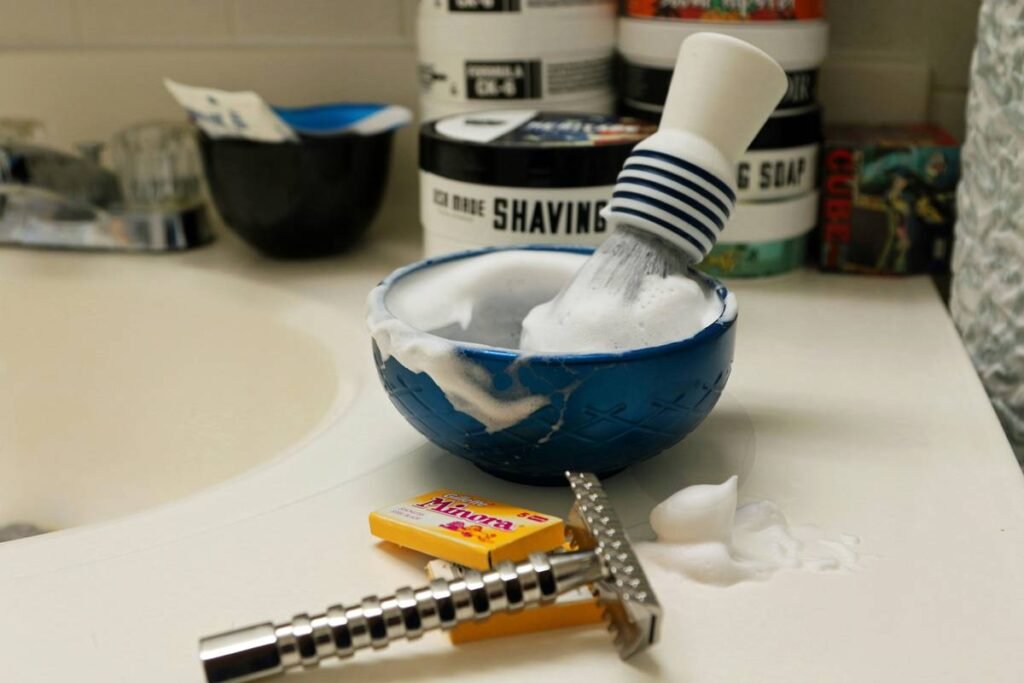
- Prep your brush first. Soak badger or boar bristles in warm water for 2–3 minutes. Squeeze gently—never wring—to retain heat and softness.
- Bowl vs. face lathering? Bowl lathering gives more control and richer lather. Face lathering exfoliates better but uses more product.
- Use warm—not hot—water. Hot water degrades glycerin and can open pores too aggressively, leading to post-shave bumps.
- Let the soap dry between uses. Store it on a draining soap dish. A soggy puck breeds bacteria and dissolves faster.
- Build lather slowly. 60–90 seconds of swirling creates micro-bubbles that cushion the blade. Rushing = thin lather = razor drag.
Grumpy Optimist Dialogue:
Optimist You: “Follow these tips for the smoothest shave of your life!”
Grumpy You: “Ugh, fine—but only if I get to skip leg day tomorrow.”
Real Results: My 30-Day Test of 4 Heritage Shaving Soaps
Last winter, I tested four top-rated traditional shaving soaps across different conditions: dry indoor air, post-beard growth, and travel (yes, I packed a soap puck to Iceland).
- Proraso Red (Tallow-Free): Excellent for sensitive skin, but lather thinned quickly in hard water. Great starter soap.
- Mitchell’s Wool Fat: Legendary among wet shavers. Created pillowy lather even in 20°F weather. My winter MVP.
- Taylor of Old Bond Street Sandalwood: Luxurious scent, decent slip—but left slight residue on my brush. Better for daily maintenance than heavy stubble.
- Crooked Tree Soap Works “Black Cedar”: Artisanal, small-batch. Highest glycerin content I’ve tested. Zero irritation after 3 days of double-edge shaving.
The winner? Mitchell’s Wool Fat—not just for performance, but for consistency across environments. It’s been made the same way since 1930, and honestly, some formulas don’t need reinventing.
🚫 Terrible Tip Disclaimer
“Just use any bar soap—it’s basically the same.” NO. Bar soaps have high pH (9–10) that disrupts your skin’s acid mantle (pH 4.5–5.5), causing dryness and irritation. Shaving soaps are formulated at skin-neutral pH. Don’t risk it.
Rant Section: My Niche Pet Peeve
Brands that call their product “shaving soap” when it’s just a rebadged moisturizing bar with zero stearic acid. If it doesn’t build dense, stable lather in under 90 seconds, it’s not a shaving soap—it’s marketing theater. Call it what it is.
FAQs About Traditional Shaving Soaps for Men
Are traditional shaving soaps better than creams?
It depends. Soaps generally offer firmer lather and longer shelf life; creams hydrate faster in cold climates. For most men, soaps provide better blade glide and cost-per-shave value.
How long does a puck last?
A standard 3–4 oz puck lasts 3–6 months with daily use—if stored properly and not left sitting in water.
Can I use traditional shaving soap with an electric razor?
No. These soaps are designed for blade shaving (DE, safety, straight). Electric razors require dry or pre-shave lotions, not lather.
Are tallow-based soaps ethical?
Tallow is a byproduct of the meat industry—using it reduces waste. But vegan options (like those from Declaration Grooming) perform nearly as well and use sustainable palm alternatives.
Conclusion
Traditional shaving soaps for men aren’t just nostalgic—they’re scientifically superior for reducing irritation, improving blade control, and delivering unmatched lather density. Whether you’re battling winter dryness, sensitive skin, or just tired of wasting money on aerosol cans that vanish mid-shave, switching to a quality soap is one of the smartest upgrades you can make.
Start with a reputable brand like Mitchell’s Wool Fat or Proraso, pair it with a decent brush, and give yourself a week to master the technique. Your skin—and your morning routine—will thank you.
Like a Tamagotchi, your shave needs daily care. Feed it glycerin, not gimmicks.
Haiku:
Lather swirls in bowl,
Steel meets skin with whispered grace—
No burn, only calm.